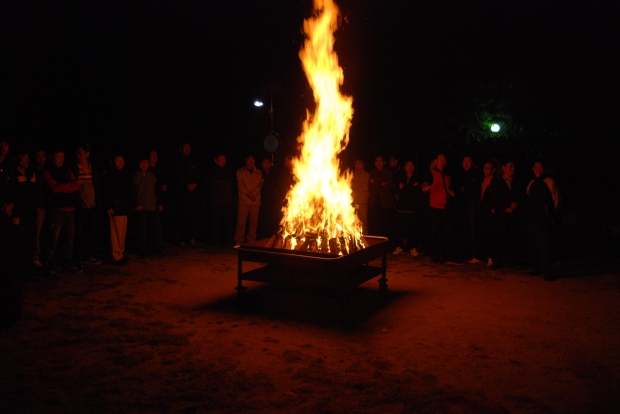
A campfire that looks out often isn’t. Embers can hide under a layer of gray ash and stay hot for hours, and according to the Forest Service, nearly 90 percent of wildfires nationwide are caused by people. Putting your fire out properly takes a few extra minutes, and it is the most important chore of any camping trip.
Before You Light It
The easiest fire to put out is the one you set up to put out. Check current fire restrictions for your area, use an established fire ring or pit when one is provided, and keep a bucket of water and a shovel within arm’s reach from the moment you strike the first match — not once you are ready for bed. Never leave a fire unattended, even briefly.
The Method: Drown, Stir, Drown, Feel
This is the sequence the Forest Service and Smokey Bear teach, and every step earns its place.
1. Drown
Pour plenty of water over the entire fire bed, not just the glowing center. Keep pouring until the hissing stops. Use more than feels necessary — the embers hiding under the ash are the ones that cause trouble.
2. Stir
Use a shovel to stir the water into the embers and ashes until you have a wet “mud pie.” Scrape the sides and ends of any partly burned sticks and logs so nothing is left exposed or smoldering — not just the pieces still glowing red.
3. Drown Again
Stirring uncovers hot material the first pour never reached. Soak the whole bed a second time.
4. Feel
Hold the back of your hand just above the wet ashes, especially around the edges, and check for heat. Do not touch the ashes themselves, since buried embers can still burn you. If you feel any warmth, stir in more water and repeat. As Smokey Bear puts it, if it is too hot to touch, it is too hot to leave.
Mistakes That Leave a Live Fire Behind
- Using only dirt or sand. Covering a fire with dirt alone isn’t enough — water is what actually cools it. Mixing dirt in while you stir is fine, but it doesn’t replace the water.
- Burying hot coals. Buried coals and ashes can keep smoldering underground. Don’t bury anything that is still warm.
- Trusting how it looks. No flames and no smoke don’t mean it’s out. Only the hand test tells you.
- Running low on water. Fill your bucket before you light the fire and know where the nearest water source is. If water is tight, keep the fire smaller and start putting it out earlier.
If You’re Using a Portable Fire Pit
Portable and smokeless fire pits are still real fires. Check your campground’s rules, follow the manufacturer’s instructions for your model, and treat the ashes with the same caution — they need to be completely cold before you dump, store, or walk away from them.
The Bottom Line
Drown it, stir it, drown it again, and feel it. Give it real time — it can take several tries — and don’t leave until the whole bed is cold to the back of your hand. It is the last thing you do at camp, and the one thing you can’t afford to rush.
Official Guidance
Related
Gear Reviews
Comfort-tested picks worth packing on your next trip.


Want More Like This?
Join our list for new gear guides, campsite finds, and comfort-camping tips. No spam, unsubscribe anytime.