This post contains affiliate links. If you buy or book through them, we may earn a commission at no extra cost to you. Full disclosure here.
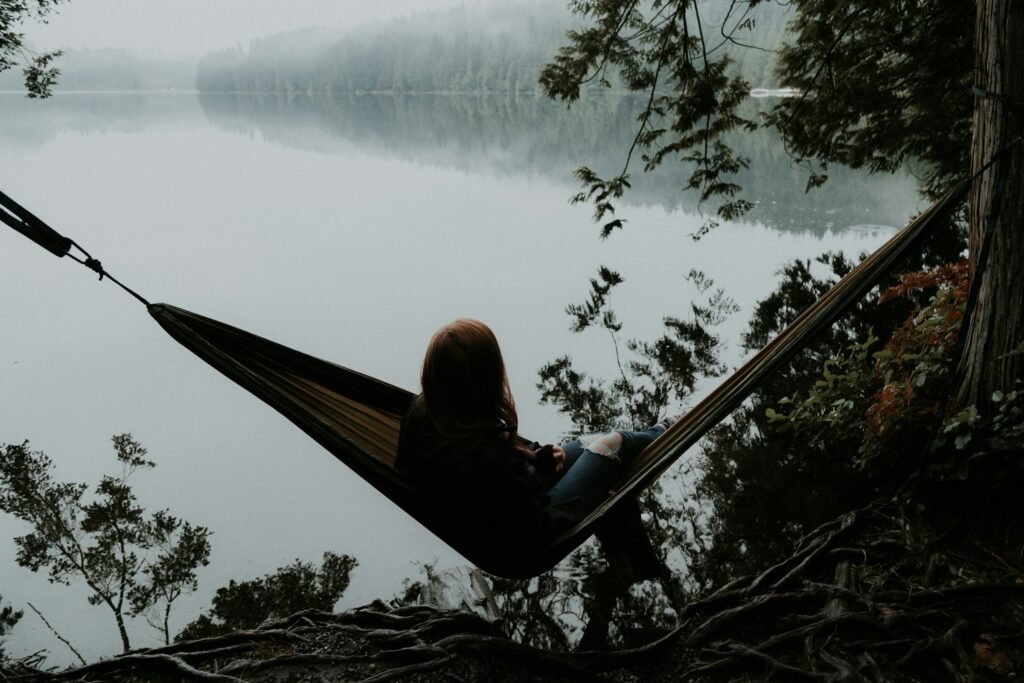
More women are camping solo than ever — choosing it for the independence and freedom it gives them to make every decision themselves. A lot of them are women over 40 who spent years planning everyone else’s trips and are finally planning one that’s just theirs.
If that’s you, this guide is written for you — not a survivalist bootcamp, not a fear-list. Just how to plan a solo camping weekend that feels comfortable, capable, and genuinely relaxing.
First, the Mindset
Solo camping isn’t a test. The goal is the same as any Nature & Chill trip: a good fire, good food, a great night’s sleep, and quiet on your own terms. Start closer to home than you think you need to — a campground 60–90 minutes away, for one or two nights, is the perfect first solo trip.
Choosing Your First Solo Campsite
- An established, well-reviewed campground — not dispersed backcountry. You want a camp host on-site, other campers around, and cell coverage.
- A camp host or staffed office. It’s completely normal to say “it’s my first solo trip” at check-in — hosts hear it constantly.
- Glamping as a gateway. If a tent feels like a lot for trip one, a glamping tent, dome, or cabin at a staffed site gives you the solo experience with a locking door and a real bed.
- A spot near a small town. Being 10 minutes from a coffee shop makes a solo trip feel like a getaway, not an expedition.
We keep a running list of solo-friendly, well-reviewed spots in our directory.
The Solo Comfort Setup
Everything from our Camping Comfort Checklist applies — but here’s what matters extra when it’s just you:
Sleep, dialed in. A thick 3–4 inch sleeping pad, a real pillow, and a bag rated well below the forecast. (Full picks in our women’s sleep-comfort guide.)
Setup you can do alone. Practice pitching your tent once in the backyard before you go. Choose a tent you can put up solo in 10 minutes.
Light, and lots of it. A bright lantern for the table, a headlamp on your head, string lights for ambiance, and a power bank to keep it all going.
Your own kitchen rhythm. A simple two-burner stove and a cooler that holds ice all weekend.
Confidence Gear (Not Fear Gear)
- A charged power bank + phone
- A basic roadside kit — jumper pack, tire inflator
- A headlamp you keep by your pillow
- A whistle and a small first-aid kit
- Share your plan — text a friend your campground name, site number, and check-out day
Notice what’s not on this list: nothing dramatic. Confidence for a solo trip comes from a reliable car, a well-lit camp, good sleep, and someone knowing where you are.
Your First Solo Evening, Roughly
Arrive with daylight to spare — give yourself two hours of light for setup on trip one. Pitch the tent, roll out the bed, get the fire going while it’s still bright. Make an easy dinner. Then do the actual point of the whole thing: sit by the fire, put your feet up, and enjoy the fact that every decision tonight is yours.
Ready to Go
- Pick a well-reviewed, staffed campground close to home → Directory
- Build your comfort setup → Camping Comfort Checklist
- Get sleep right → Women’s Sleep-Comfort Gear Guide
- Text a friend your plan, and go.
The car does the carrying. The campground has your back. The weekend is entirely yours.
Gear Reviews
Comfort-tested picks worth packing on your next trip.
Want More Like This?
Join our list for new gear guides, campsite finds, and comfort-camping tips. No spam, unsubscribe anytime.
Join the List →